Greenfeld Kt Can Gopro Rise Again
Nick Woodman, the founder and CEO of GoPro, flew into Vail, Colorado, yesterday on his individual jet. He is hither for the GoPro Mountain Games, a weekend-long festival of kayaking, rafting, rock climbing, and just well-nigh anything else you can practise at an off-flavor ski resort while wearing a mounted action camera. Woodman, whom college buddy and electric current GoPro colleague Justin Wilkenfeld describes as less "a ix-to-five-type guy" than "a hippie surfer," wanders through the tent-covered meadows wearing flip-flops, shorts, and a tank acme alongside throngs of action-sports enthusiasts. Passing a funnel-block vendor, he sniffs something else in the air. Colorado is a popular destination among the GoPro customs non merely for the adrenaline rush of extreme sports, only too because of plentiful legal weed. When he asks a GoPro events coordinator what he is doing afterwards, the junior staffer avoids heart contact with his boss, shrugs, and a piffling too adamantly insists, "Cypher. Why?"
Woodman laughs.
"It's like, dude, I don't care if you're going to enjoy some extracurriculars," he says.
The whole week is one big GoPro-palooza. Everywhere you wait, alongside the occasional toker, there is someone doing something worth capturing on video. A woman paddleboards down a brisk stream. A slack-line walker tiptoes over some rapids. A mountain biker bombs downward a ski run. A dog jumps off a dock.
Woodman has taken up position amongst a hundred spectators gathered around an aboveground puddle. Arms folded, wearing Persol sunglasses, he watches a wide range of canines bound in after tossed balls, their jumps scored for tiptop, altitude, and class. Many of the dogs are wearing GoPro cameras, and one-half the oversupply is property up GoPros. Woodman does imitations of each canine's posture in the air, hunching his shoulders, lowering his neck, recessing his jaw, or forming an overbite in his best impression of homo's best friend. A former loftier school linebacker and avid surfer, Woodman has an like shooting fish in a barrel physicality that he uses in conversations to illustrate a indicate or reenact an experience. He also has the infectious self-confidence of an entrepreneur who built his ain business organization into a billion-dollar-a-year juggernaut before the age of 40. The GoPro Games are similar an annual victory lap for Woodman, a reminder that no matter how dilapidated his visitor's stock price—and over the past twelvemonth or and then it has taken a wallop—the brand is still thriving.
When Woodman assembled the first GoPro camera in the early 2000s, he created not but a novel, durable device, but an entirely new market: the action camera. The company grew quickly, its devices becoming ubiquitous at ski resorts, surf spots, and other adventure destinations. With a huge assist from 140 sponsored athletes, GoPro videos garnered millions of views on YouTube. By 2012, the company v was averaging 100% annual top-line growth. Its 2014 IPO was a wild success, with shares leaping 140% in the first iii months. Giddy investors hoped that the upstart tech company could leverage hardware into fifty-fifty more assisting software spaces: media management, entertainment, social networking. But a disastrous 2015—including the flubbed launch of a new camera—punctured that enthusiasm. Revenue for the first quarter of 2016 was down yr over year, and a much-anticipated drone release was delayed. When Woodman arrives at the GoPro Games, the company's stock is flirting with all-time lows, down nearly 90% from its peak.
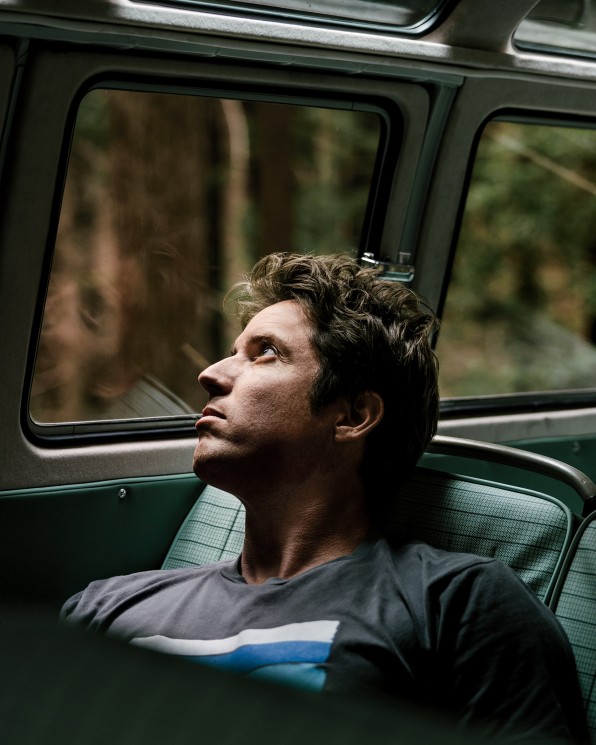
Information technology's a ride that could make even the most seasoned extreme-sports enthusiast dizzy. Woodman takes a seat on an off-duty ski lift, the high Rocky Mountain sun behind him. And then he dives into his program for reviving the visitor he loves. He says that a trio of new products being released this fall—including that delayed drone, called the Karma—volition aid win over a swarm of fresh consumers. New software will make video editing easier and content fifty-fifty more than shareable. He is relentlessly optimistic.
"In a sense, we will make the GoPro a detachable lens of your phone," Woodman says. "By enabling a GoPro to auto upload its content to the deject, your footage moves over to your telephone. We will blow the doors off this."
Woodman sees GoPro as a sort of mini Apple, a hardware company that is evolving into a software platform with social networking features. Its business model will even include monthly subscription fees alongside steady hardware upgrades. He evinces no worry about naysayers who compare GoPro to the Flip, the superhot handheld digital video recorder that launched in 2007, chop-chop dominated the camcorder market place, was bought by Cisco in 2009, and shut downwards in 2011, when video-capable smartphones quickly fabricated it obsolete. Today's smartphones are becoming always more durable—both Samsung's Galaxy S7 and iPhone 7 are water-resistant—while lens quality is rapidly budgeted GoPro's most avant-garde offering. (The iPhone seven offers a 12-megapixel sensor, the same as GoPro's new Hero5, and a true zoom lens, which GoPro's Hero5 lacks.) "My kids are xvi," says Michael Pachter, an analyst with Wedbush. "And I don't recall ever going to a soccer game and seeing people with GoPro cameras. They are taking videos on their phone. I recall that limits GoPro'south addressable market. Imagine simply marketing your shoes to professional athletes. Nike wouldn't exist Nike if they didn't sell shoes to everyone."
Woodman's response to this: The smartphone nail actually works in GoPro'southward favor. "You can put a GoPro in places you wouldn't desire to put all your information," he says. "Like, practise y'all actually want your phone, and all your data, attached to a drone ii,000 feet up?" In fact, while we are talking, my iPhone overheats in the sunday, causing the phonation recorder to fail, only the GoPro camera trained on us records the entire conversation.
Woodman's office in GoPro'due south San Mateo, California, headquarters is just a few miles from the firm on Moss Beach where he crafted the offset prototype for the GoPro Hero. He'southward notoriously decumbent, in one case he begins speaking, to going over his scheduled fourth dimension. As more of the company'southward projects accept moved exterior his area of expertise—software, drones, virtual reality—he has learned to defer more than to his staff. He's married with three children, and his steady enjoyment of his success is evident from how eagerly he shares his experiences, either surf trips to islands off Nicaragua or video clips—some of them shot, he sheepishly admits, on an iPhone—of a lavish altogether with his friends.
His desk is uncluttered. Behind him, a cabinet bursts with souvenirs—motorbike helmets, giant bottles of vino, an Emmy Award (which the company won for the Hero3 in the Technology and Engineering category), a model of the VW van that he and his then-wife-to-be, college sweetheart and boyfriend Academy of California, San Diego, fine-arts major Jill Woodman, drove upwardly and down the California coast selling bead and shell belts she fabricated to assistance fund the visitor'south launch.
When Woodman offset began envisioning what would get GoPro during a surf trip in Republic of indonesia in 2002, cell-telephone cameras were a novelty rather than a standard feature, and nobody dared have a video camera into the water. What Woodman wanted was to capture surfing images from the perspective of the surfer. "I went to a surf shop and bought a bodyboard leash, and I bought all these O-rings and off-the-shelf parts at Home Depot, and I borrowed my mom's sewing machine," Woodman says. His first effort wasn't a camera; it was a strap, onto which he mounted a disposable camera and added a few features so that the camera was easier to click while in the water. The strap worked well enough that Woodman decided that his calling was making exclusively those.
It wasn't the offset business concern Woodman had attempted. The son of an investment broker who grew up in Atherton, California, Woodman quit his Menlo Park high school football team before his senior season to surf. "Everyone was like, 'Dude, you tin can't quit,' but then I thought, No, I have something unique going on. And I remember that feeling good. That was my first lesson where I felt that, hey, doing something different from everybody is satisfying." It was during a golf outing with his male parent when he was 17 that he decided he wanted to be an entrepreneur. "We were on the seventh pigsty at Burlingame Land Club in San Mateo, and in that location was a large old house being built on the side of the fairway, and my dad said, 'Meet that house, that's my friend'due south son. His proper noun is Peter Gotcher and he merely sold his business." (Gotcher was one of the founders of ProTools and now sits on GoPro's board.) Entrepreneurship, his begetter told him, is one of the nearly reliable ways to do actually well financially. Then Dean Woodman nudged his son and said, "I bet y'all can practice that one day, Nicky. Yous accept a lot of ideas."
I of Woodman'southward earliest ventures, which he started upon graduating from college, was FunBug, an online video-game visitor that offered users a take a chance to enter a weekly raffle. Woodman blamed himself when the company didn't make information technology. "Here'south something that I learned with FunBug," he says. "FunBug didn't fail. I failed. FunBug is just a concern. Information technology's a production of your own cosmos and the squad's execution, so businesses don't fail, the people who are running a business fail. That was a hard time for me." Woodman gave himself until age 30 to come up up with something successful. "Immature enough to start a career from scratch, merely enough time to brand it as an entrepreneur," he says. "I promised myself that even if I failed repeatedly I would not end, no matter what."
The wrist strap seemed an unlikely prospect, simply Woodman dug in. Every bit he experimented selling them in surf shops for nigh $15, he was blunted by the quality of waterproof cameras available on the market, which were oftentimes unreliable and tended to cleft in crude surf. He tried to license the wrist strap to Kodak and then that it could build a better, more undecayed photographic camera on summit of it. "I thought I could make a couple hundred thousand bucks a year, but they were selling and then many disposable cameras anyway, they didn't meet this as role of the time to come. Kodak non being interested saved GoPro."
After searching in vain for a durable, waterproof camera at merchandise shows effectually the country, he decided to build his ain. He set to work on a epitome, in what can just be described as obsessive fashion. He wore a CamelBak haversack for rehydration and worked 18- to twenty-hour days, carving and shaping plastic with a Dremel and using a mucilage gun to affix plastic buttons and lenses. He sent his model to Hotax, a Chinese camera company, and it sent him dorsum a digital file that he couldn't open up. It took him a few hours to figure out information technology was in a standard format for 3-D modeling, and when he finally glimpsed and rotated the model, with the water housing and all the fit points that would let it to stay attached to an athlete at play, "I was and then stoked." With around $20,000 left over from FunBug (and his married woman's shell belts), plus a $200,000 loan from his parents, he made a bargain with Hotax to manufacture each camera for about $3 and sold them at surf shops for $14. The first GoPro Hero was born.
Woodman, with each ensuing iteration, showed an uncanny knack for product design, and GoPro quickly became the dominant player in what has grown into a $6 billion market, selling more 5 one thousand thousand cameras a year. Along with the steadily rising sales, Woodman now admits, came a pretty bad example of founder's hubris. The visitor was a media darling, with Woodman the subject of glowing profiles and the durable cameras helping to redefine activity sports. The "GoPro video" became a genre unto itself—jerky, POV shots that provided the viewer with a taste of the experience. The GoPro aqueduct on YouTube attracted more iv 1000000 subscribers and over a billion video views, and the cultural reach of the company transformed the sports landscape, with athletes able to film themselves using smaller, lighter cameras than ever before. "It's a huge shift," says professional snowboarder Mike Basich. "You don't need a cameraman. In the by, y'all ever had a crew. Now you lot can steer your expression closest to what you lot experience yourself."
For sports like snowboarding, skateboarding, skiing, and surfing, the inflow of GoPro accelerated the trend toward more and better footage, while the explosion of social media meant there were now numerous outlets for amateur athletes to share that content.
The company had achieved that rarest of parlays: It was both cool and a keen business, with universal recognition inside its category, bountiful goodwill from a youthful market place, and margins on individual cameras of close to 50%. Wall Street was similarly infatuated, and a few months after the visitor went public, in June 2014, the company introduced the Hero4 Argent, its best-selling camera. That October, GoPro's stock peaked at virtually $94. Near immediately, Woodman angered investors with a surprise donation of 5.viii million shares of GoPro stock to the Silicon Valley Customs System, which diluted shareholder equity. Soon, co-ordinate to Woodman, "the afterglow started to wane a little bit. Nosotros had so much publicity from the IPO, we didn't recognize the need to ramp up our marketing." Fifty-fifty every bit demand for cameras began to slacken, GoPro continued to rely on viral videos and word of mouth instead of more strategic advertising.
Analysts and reporters began asking if GoPro had saturated its market. How much more than than fifty% of the activity-camera industry could it really take over? (Sony, Garmin, Praktika, and a host of other cheaper alternatives had by so carved out single-digit market-share niches.) In the overall video-camera field, GoPro was already selling half dozen of the pinnacle 10 virtually popular cameras. Where was growth going to come up from?
A great new product might have calmed these concerns. Merely instead, in July 2015, the company launched the $399 GoPro Hero4 Session, a point-and-shoot camera that diameter an unfortunate resemblance, in style if not function, to a competing $99 offering from Polaroid. The visitor and Woodman were widely pilloried for overcharging for an underwhelming production. (It lacked an LCD screen and 4K capability.) GoPro eventually dropped the Session's toll to $199, and Woodman went on QVC himself to try to motion units. Revenue in the third quarter of 2015 missed the lower finish of GoPro's guidance, and a lull ready in. In the first quarter of 2016, revenue was down 50% year over year. In May, shares striking a low of $8.80.
Sitting in his office reflecting on this history, Woodman leans back in his chrome armchair, puts his hands together in almost a parody of a homo in contemplation, and takes total responsibility for GoPro's missteps. "I'yard the one who made the error on pricing Session, I'grand the one who made the fault with pulling back on marketing, I'1000 the one who fabricated the mistake with releasing besides many products at the expense of consumer confusion. These were my calls," Woodman says. He was, he insists, swept up in his own success. Woodman truly believed the Session was a remarkable camera: waterproof in its own casing, easy to apply, substantially a one-push button-capture solution. But he says that greed got the meliorate of him: He priced information technology as well loftier. "At the cease of the twenty-four hours, it's hard to call information technology annihilation else. Simply nosotros thought it was so proficient it would be worth information technology."
The Session debut, and the disappointing sales that accept haunted the visitor over the past year, marked what could now exist considered the end of the showtime for GoPro. "The media were hard on the states when we stumbled, only we deserved information technology," he says. "What you didn't see from us was lashing out and proverb, 'You don't understand.' Nosotros acknowledged it. Nosotros put downwardly our heads, determined what was wrong, and said we were going to set it."
A big role of the fix is supposed to be the Hero5, which launches in October. The most advanced GoPro however, information technology will have a faster processor, built-in waterproof casing, linear horizon stabilization, and improved audio quality, including automatic microphone adjustment when there is noise or hiss from wind or weather condition.
But information technology'south a new software package, internally code-named Yellowstone, that is potentially the biggest advance. Fifty-fifty GoPro's most devoted users have long bemoaned that, as easy equally it is to capture footage with a GoPro, moving that footage from camera to computer or phone, editing it into a compelling video, and so sharing it to a social media platform is too difficult. Every step of the procedure, from turning on the photographic camera's built-in Wi-Fi to transferring the footage to editing those images into a punchy, brusk clip, has been slowed down past what Woodman himself describes equally "pain points."
I happened to ride back from the GoPro Games in Vail to Denver International Airport with C.J. Prober, the senior vice president of software and services for GoPro, and the whole ride back both of us were editing footage of our day spent whitewater kayaking. The drive was approximately two hours, and all that time we had our heads down, clipping and transferring footage. Occasionally, I had questions near moving data from the two GoPros I was using to my phone in order to do an edit. Prober, an Electronic Arts veteran, knows GoPro software literally better than anyone, and twice, he was stumped by my technical problems.
While gorging athletes may be willing to spend a few hours editing downwardly that twenty-four hours's session to a cool three-minute video, most of us don't accept the patience. "There is a lot of unwatched and unedited GoPro footage out there," says Brad Erickson, an analyst with Pacific Crest Securities. "It's daunting to capture video and deal with editing information technology. If you enquire a lot of people who bought GoPros two years ago how much they really use them and ultimately what the utility was for that device, yous find a broad range of answers, including: 'We've used it twice and haven't taken it out of the box since.' "
Woodman once again blames himself for how wearisome GoPro has been to address these limitations. "I underestimated the size of the team and experience needed in leadership to develop the software experience that nosotros needed," he says. "Information technology's an entirely unlike skill set and approach than hardware." Woodman, who dropped his one programming course in college—"I have never tried so hard to be so sub-mediocre at annihilation in my life"—in 2014 hired Prober, along with veteran tech visitor executive and network and infrastructure pro Tony Bates, who became president. When we all gather in Woodman'due south office a few weeks later, Woodman eagerly points to both hires, and several more in software and new products, equally examples of his taking ownership of his own mistakes, citing one of GoPro's half-dozen cadre values, Integrity Always, as the source of inspiration.
"Make Friends. Haul Ass. No Half-Assery. And then, um," Woodman says, pausing to attempt to call back GoPro'southward core values. "The last one is Be a Hero, and then, higher up that is Integrity Always. Maybe information technology'due south only five core values? How many core values practise we have? Oh, Maintain Remainder is the ane I forgot. How many is that? Anyway, you accept to accept ownership of your mistakes. People respect that."
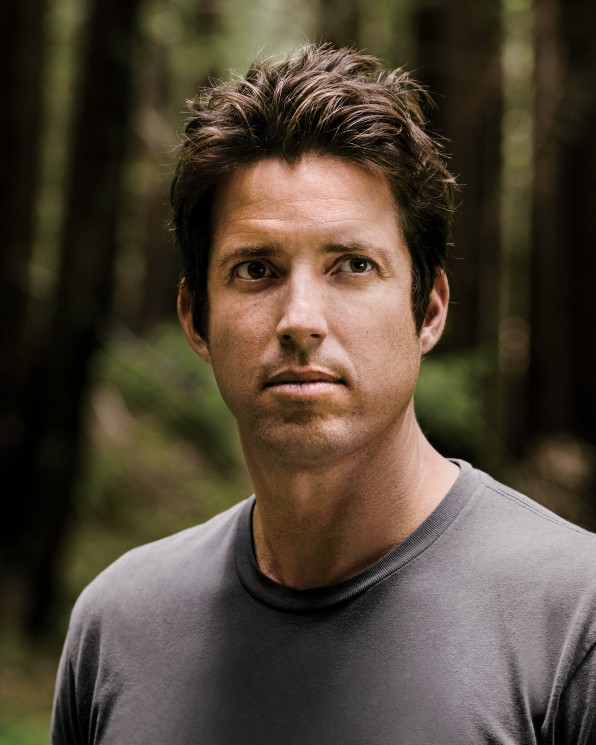
The company also acquired two mobile-based video-editing platforms, Replay (which evolved into Quik) and Splice, for a combined $105 one thousand thousand in 2016, integrating both into a broader vision that Prober describes as a "seamless feel, from capture to share—intelligent systems that recognize the highlight moments of your life and automatically uploads that to the cloud and so that it is waiting for you on your computer at abode when you open the app."
In demonstrations, the new software packet allowed me to offload, pluck clips, edit, play, and share videos quickly and easily. But will the upgrade fundamentally shift GoPro'south business model? "The easiest style of understanding where we are and where we want to be is, up until the launch of Hero5 and Yellowstone, GoPro has arguably been an iPod-like success, simply without its iTunes," Woodman says. "Imagine if Apple tree hadn't launched iTunes? The iPod would be just some other MP3 actor. Apple [made] it easy for people to consume and manage massive amounts of content." Just unlike iTunes, this software comes with a price: $5 a month. Whether charging that fee is another example of greed or rather a smart, strategic expansion of revenue streams remains to be seen.
GoPro is also developing a variety of short-form narrative shows on its YouTube channel, some of them just available on a subscription basis. Sitting at the nexus of social media and high-resolution video has meant that GoPro was, from the start, an entertainment brand also as a consumer electronics manufacturer, and the company continues to use this to its advantage. (Perhaps simply Red Bull has been as successful at marketing itself through creating and distributing action-sports footage.) The GoPro Awards program, which flows free product and massive publicity to amateur GoPro users, has been a successful offshoot to sponsoring athletes, who typically create the best and nearly-watched videos. Now the company is looking to do fifty-fifty more, by partnering with the likes of soccer team Real Madrid and Moto GP superstar Valentino Rossi and developing original programming ready to debut the cease of 2017. "Nosotros drive revenue in a number of ways," says Body of water MacAdams, vice president of GoPro Entertainment. "From YouTube, from our audience sending us stuff that we tin license to other users, and [from] working with [other companies] to create revenue around their brands," such equally a recent series produced with Ford around the launch of a new truck. "We'd love people to buy the cameras," he says, "just we also know there are people who enjoy our amusement programme who don't own a photographic camera. GoPro programming is one more than way to become them into the ecosystem, and so eventually make a camera sale."
Karma, GoPro's new drone—or, excuse me, as GoPro calls it, "aerial capture device"—is another example of how the company is hoping to lure new user groups. The drone marketplace, according to several analysts who follow the company, is potentially as large as the activity-camera market place, and faster growing, but it is already dominated by a large thespian, Chinese company DJI and its flagship product, the Phantom iv. "If [GoPro'due south] drone is successful, that is one quick road to doubling the size of the company," says Dougherty & Company analyst Charles Anderson. Speculation well-nigh the GoPro drone product had been fevered for the offset half of 2016, and the company'due south announcement in April that it would be delayed farther hammered the stock. Now, Woodman believes, GoPro has nailed information technology, unveiling a package that includes a iv-propeller drone, a GoPro Hero5 camera, a handheld remote, and a detachable, three-axis gimbal—or stabilization device—which makes the Karma a ane-terminate solution for image capture, be it terrestrial or aerial. The product is intended to go from its sleek backpack to taking flight inside 2 minutes, the wings and landing gear folding out hands. (Setup and assembly for about higher-end drones, including a Phantom four, can ruin a Christmas morn.) Pablo Lema, GoPro's senior director of aerial products, insists that Karma is the logical extension of the company's mission of capturing cool footage. "If you think most information technology, a drone is nothing more than than a really, really complicated selfie stick that lets you lot position it anywhere in the world." From an image-capture standpoint, Karma is a killer camera, due to the combination of the Hero5, that superior gimbal, and the front-mounting of both, a thorny engineering problem that Lema'due south team croaky. (Consumer drone footage has long been plagued by the visibility of rotors in the corners and sides of the images. Karma'due south photographic camera placement solves that.) "We're making it easy to get previously unimaginable footage of your life," says Woodman.
Just Karma isn't going to win any drone races. It's slower than the Phantom 4–and the foldable Mavic Pro, which DJI launched in tardily September–and lacks its competitors' Follow feature, which enables the drone to trail the user to capture footage, along with its obstacle-avoidance capabilities and range. GoPro is wagering that the Karma bundle volition entice both the start-time buyer and its preexisting user base of operations, who instead of plunking down $400 for a Hero5 may figure that $1,100 for the whole lot is besides good a bargain to refuse. (The list price for the Phantom four is $ane,400.)
"It's equally though nosotros've put Hollywood in a backpack," says Woodman. "All of information technology is super-easy to use. It'southward so comfortable you volition forget yous even have it on." The goal, Woodman says, "is to make the drone a part of your feel, rather than making the feel all most the drone." (The dream of many snowboarders and surfers—to have their GoPro hover overhead and nab aeriform footage of them during a session—is still a couple of software iterations away, Lema says. "That's a desired use case. We have to make it work actually well. We are confident we will get there, and more.")
To become all its new products out, GoPro has been called-for through money at a faster rate than at any time since 2010, and finds itself in the 3rd quarter of 2016 with less greenbacks on hand than any other point since going public. It has other brand-new offerings on the market place, including a potentially game-changing, $5,000 virtual-reality photographic camera rig, the Omni (made of six Hero4 cameras shooting 360 degrees), forth with a VR software-management parcel. But Woodman will need to demonstrate more attention to deadlines—no more delayed launches—if he wants to prove that the lessons of the past twelvemonth have really been learned.
Perhaps he'll succeed in creating a "mini Apple tree," expanding the action-camera enterprise into a digital subscription ecosystem and building a drone business that further integrates the company into its users' lives—and wins over new users outside the action-sports community. But fifty-fifty if the bets on software and flying machines don't pay off, that doesn't mean GoPro will go the style of the Flip. Every bit a simple photographic camera company, GoPro remains hugely successful, pulling in $one.half dozen billion in 2015. "They don't need to exist similar Apple," says analyst Anderson. "They just need cameras that are functional, and editing software that is functional. They can be a great visitor at right around a billion in revenue and pay a salubrious dividend and life'due south fine. Just it doesn't seem similar that'south where they want to go."
"No," Woodman says, adamantly. "We make the best cameras in the world, and volumes are big. Just nosotros can be even more than."
johnstonwhoultall.blogspot.com
Source: https://www.fastcompany.com/3064066/gopro-looks-to-the-skies
0 Response to "Greenfeld Kt Can Gopro Rise Again"
Post a Comment